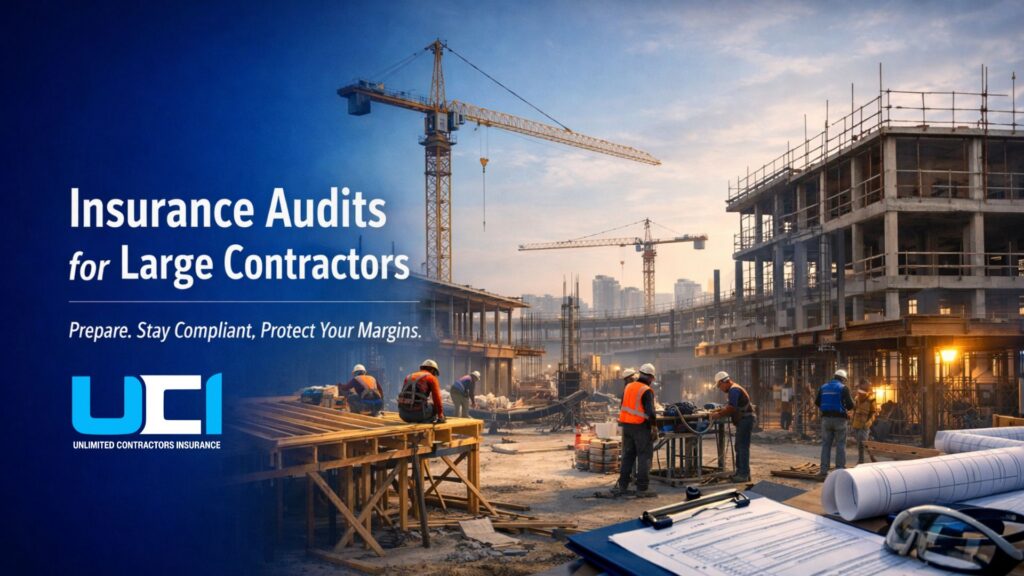
For large contractors, insurance audits aren’t just routine check-ins — they directly impact your premiums, your ability to win jobs, and your long-term scalability. A poorly handled audit can lead to unexpected costs, coverage issues, or even lost contracts. On the other hand, a well-prepared audit positions your business as organized, compliant, and easy to work with.
At scale, audits become more complex. You’re managing multiple crews, subcontractors, job sites, and evolving risk exposure. That means preparation isn’t something you do once a year — it’s something you build into your operations.
If your documentation, payroll, and subcontractor compliance aren’t dialed in, audits will expose it. If they are, audits become a competitive advantage.
Need help structuring your policies and documentation the right way before your next audit?
Get ahead of it here:
Understanding the Insurance Audit Process
Insurance audits are designed to verify that your policy reflects your actual operations. Carriers want to confirm your payroll, subcontractor usage, job types, and overall exposure match what was originally reported.
For large contractors, this process typically includes a deep review of financials, labor classifications, and risk management practices. The goal isn’t just compliance — it’s accuracy. And any mismatch can result in premium adjustments or policy corrections.
Preparation starts long before the audit begins. When your records are organized and aligned with your policy, the audit becomes a validation — not a disruption.
What auditors are looking for
Auditors are primarily focused on aligning your real-world operations with your coverage. This typically includes:
- Payroll accuracy and employee classifications
- Subcontractor usage and insurance compliance
- Job types and scope of work
- Claims history and risk exposure
- Financial consistency across reports
The more structured and transparent your data is, the smoother this process becomes.
The Types of Insurance Audits Contractors Face
Not all audits are the same. Large contractors typically deal with multiple audit types, each evaluating a different part of the business.
Workers’ Compensation Audits
Workers’ comp audits are heavily focused on payroll, employee classifications, and job roles. Misclassifying workers or underreporting payroll is one of the fastest ways to increase premiums after an audit.
Strong internal tracking of labor, roles, and hours worked is critical here. This is where many large contractors lose control if systems aren’t tight.
General Liability Audits
General liability audits evaluate your overall exposure — what work you’re doing, where you’re doing it, and how risky it is. This includes reviewing contracts, job types, and claims history.
If your operations have scaled or shifted and your policy hasn’t kept up, this audit will surface that gap.
Property and Equipment Audits
These audits ensure your equipment, tools, and assets are properly valued and covered. As your business grows, outdated equipment lists or undervalued assets can create serious coverage gaps.
Supporting factors include:
- Updated equipment schedules
- Accurate replacement costs
- Inventory tracking
- Business interruption considerations
The Documentation That Makes or Breaks Your Audit
The difference between a smooth audit and a costly one often comes down to documentation. Large contractors need a system — not a scramble — when it comes to organizing key records.
At a minimum, your audit readiness should include:
- Profit and loss statements
- Payroll reports and employee classifications
- Subcontractor agreements and payment records
- Certificates of insurance for all subs
- Job contracts and change orders
- Safety programs, logs, and incident reports
When these are organized and easily accessible, audits move faster and with fewer issues.
If you’re unsure whether your current setup would hold up under audit pressure, it’s worth reviewing your structure now.
Why Payroll Accuracy Is Critical
Payroll is one of the most scrutinized elements in any contractor audit — and one of the most common sources of discrepancies.
For large contractors, even small inconsistencies across multiple crews can compound into significant premium adjustments. Accurate classification of workers, proper tracking of hours, and alignment with job roles are essential.
Clean payroll records don’t just protect you financially — they signal professionalism and control over your operations.
Supporting best practices include:
- Consistent employee classification across all projects
- Clear separation between W-2 employees and subcontractors
- Accurate tracking of overtime and job-specific labor
- Alignment between payroll data and reported exposures
Subcontractor Compliance: Where Most Contractors Slip
As your projects scale, subcontractor usage increases — and so does your risk. One of the biggest audit issues large contractors face is improper subcontractor documentation.
If a subcontractor doesn’t carry proper coverage, that risk can fall back on you.
To stay protected, you need:
- Signed subcontractor agreements
- Current certificates of insurance (COIs)
- Verification of required endorsements
- Clear payment tracking tied to each subcontractor
This isn’t just audit preparation — it’s jobsite protection.
Staying Audit-Ready Year-Round
The contractors who handle audits best aren’t preparing last minute — they’re operating in a constant state of readiness.
This means building systems that keep your documentation, compliance, and reporting aligned throughout the year.
A strong year-round approach includes:
- Regular internal reviews of payroll and classifications
- Ongoing subcontractor compliance tracking
- Updated documentation as projects evolve
- Periodic policy reviews to match business growth
When audits arrive, nothing should feel new.
Running Internal Audits Before the Real One
One of the most effective strategies large contractors use is conducting internal audits before the carrier does.
This allows you to catch discrepancies early, fix gaps, and approach the official audit with confidence.
Internal audits help you:
- Identify inconsistencies in payroll or classifications
- Catch missing subcontractor documentation
- Validate financial alignment across reports
- Reduce surprises during the official audit
Think of it as controlling the narrative before someone else reviews it.
What Happens on Audit Day
Audit day is typically structured and straightforward — if you’re prepared.
You can expect a review of your documents, questions around your operations, and clarification on any inconsistencies. This is also your opportunity to demonstrate that your business is organized, compliant, and professionally managed.
Common audit interactions include:
- Walkthrough of payroll and labor structure
- Review of subcontractor relationships
- Questions about job types and scope
- Discussion of claims or past incidents
When your systems are clean, this becomes a confirmation — not an interrogation.
Handling Discrepancies the Right Way
Even well-run contractors encounter discrepancies. The difference is how they handle them.
Address issues quickly, provide clear documentation, and communicate openly with your auditor. Transparency goes a long way in building trust and minimizing negative outcomes.
Strong contractors don’t avoid issues — they resolve them efficiently.
Turning Audits Into a Competitive Advantage
Most contractors view audits as a risk. The best contractors use them as leverage.
When your operations, documentation, and insurance structure are dialed in, audits reinforce your credibility with carriers, clients, and partners.
This leads to:
- More competitive premiums
- Faster approvals on jobsites
- Stronger relationships with carriers
- Increased trust from GCs and project owners
At scale, this matters.
If you’re operating across multiple jobs, states, or large contracts, your insurance structure needs to match your growth.
Final Thoughts
Insurance audits are inevitable for large contractors — but costly surprises aren’t.
When your payroll, subcontractor compliance, and documentation are aligned, audits become predictable and manageable. More importantly, they become proof that your business is built to operate at a higher level.
The contractors who win long-term aren’t just insured — they’re structured.
Make sure your coverage, documentation, and audit readiness are built for scale.