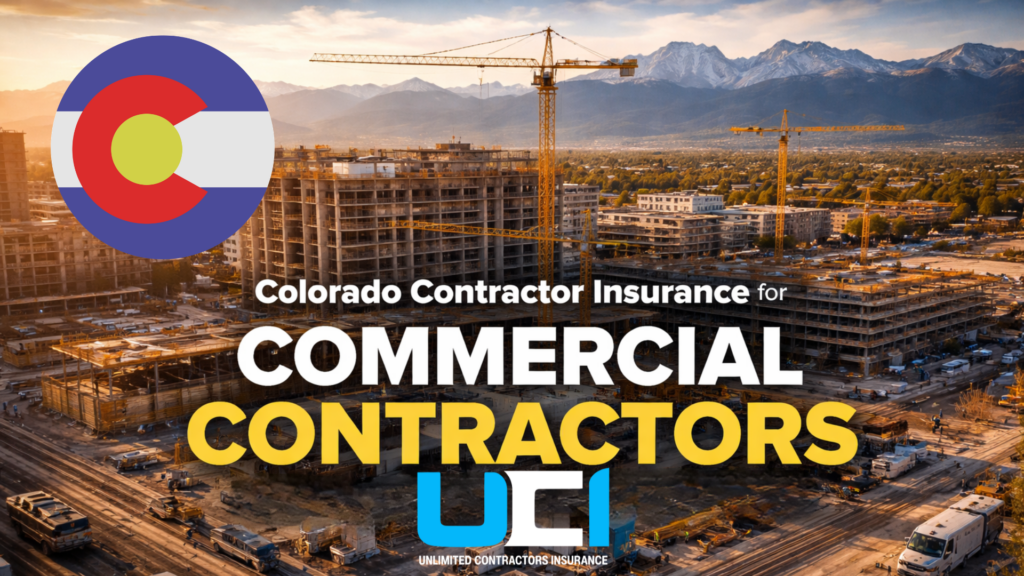
Most contractors don’t think about insurance until something goes wrong.
But in Colorado’s commercial construction environment—where contracts are tighter, liabilities are higher, and expectations are non-negotiable—insurance isn’t just protection.
It’s part of how your business operates.
If your coverage isn’t structured correctly, it won’t just fail quietly. It will fail at the exact moment your business is exposed the most.
What Contractor Insurance Actually Means at a Commercial Level
It’s Not About Having Coverage — It’s About Structuring Risk
At a basic level, contractor insurance transfers risk.
At a commercial level, it engineers risk out of your operations before a project even begins.
There’s a difference between:
- A policy that exists
- And a policy that actually responds when a claim hits
Most issues don’t come from lack of insurance—they come from misalignment:
- Wrong classifications
- Missing endorsements
- Limits that don’t match contract requirements
- Coverage that doesn’t extend to real-world exposure
That’s where contractors get caught off guard.
Why Insurance Becomes a Growth Constraint (or Enabler)
The Hidden Gatekeeper to Better Projects
As you move into higher-value work, insurance becomes a filter.
You’re no longer just bidding on projects—you’re being evaluated on whether your insurance structure meets the requirements to even participate.
Without the right structure:
- You get blocked from larger contracts
- You face delays during contract review
- You risk rejection due to compliance gaps
With the right structure:
- You move faster through approvals
- You build trust instantly
- You position yourself as a serious operator
Insurance isn’t just protection—it’s access.
Key Risks Commercial Contractors Face in Colorado
Environmental + Operational Exposure
Colorado introduces a layered risk environment that contractors need to plan for upfront.
Environmental risks:
- Snow and freeze conditions impacting jobsite safety
- Wind exposure affecting structural work and materials
- Rapid weather shifts causing delays and liability
Operational risks:
- Subcontractor liability and uninsured exposure
- Equipment theft across multiple job sites
- Jobsite injuries and OSHA-related issues
- Contractual liability tied to delays or defects
- Regulatory and compliance changes
The risk isn’t one thing—it’s stacked exposure across every project phase.
Core Insurance Coverages (And How They Should Be Structured)
A strong insurance program isn’t about adding policies—it’s about making sure everything works together.
General Liability Insurance
The Foundation of Your Coverage
This covers:
- Third-party bodily injury
- Property damage
- Personal and advertising injury
But at a commercial level, what matters is how it’s written:
- Are additional insured endorsements included correctly?
- Does it extend to completed operations?
- Are limits aligned with your contracts?
Most contractors have general liability.
Few have it structured correctly.
Workers’ Compensation Insurance
Protection for Your Team — and Your Balance Sheet
Required in Colorado if you have employees.
But beyond compliance, it:
- Covers medical costs and lost wages
- Protects against employee lawsuits
- Stabilizes your operations after incidents
A weak workers’ comp structure can drive premiums up and create long-term cost issues.
A strong one becomes a financial control mechanism.
Commercial Auto Insurance
Often Overlooked, Frequently Triggered
If vehicles are part of your operations, this exposure is constant.
Accidents involving company vehicles can create:
- Immediate financial liability
- Legal exposure
- Project disruptions
This coverage ensures your operations don’t stall from a single incident.
Equipment & Inland Marine Coverage
Protecting Your Revenue-Generating Assets
Your equipment is not just gear—it’s how you make money.
Coverage should account for:
- Theft across job sites
- Damage in transit
- Equipment breakdown impacting timelines
Without this, one incident can halt an entire project pipeline.
Professional Liability (When Applicable)
Where Execution Meets Decision Risk
If your work involves:
- Design input
- Planning decisions
- Engineering influence
Then you carry professional exposure.
This coverage protects against:
- Errors
- Omissions
- Design-related claims
It’s critical for contractors operating in more complex project environments.
What General Liability Covers — and Where It Fails
The Most Misunderstood Coverage
General liability is often assumed to “cover everything.”
It doesn’t.
Typically covers:
- Third-party injuries
- Property damage
- Personal injury claims
Typically does NOT cover:
- Faulty workmanship
- Contract disputes
- Certain subcontractor issues
- Work excluded by endorsements
This gap between expectation and reality is where most major issues occur.
Legal Requirements in Colorado
Compliance Is the Floor — Not the Strategy
Colorado requires:
- Workers’ compensation (if you have employees)
General liability is often:
- Contractually required (not legally mandated)
But meeting minimum requirements doesn’t mean you’re protected.
Most contractors who run into problems were technically compliant—but structurally exposed.
How to Set Coverage Limits Strategically
Avoiding the Two Biggest Mistakes
Underinsuring
- Leaves gaps during major claims
- Fails contract requirements
- Puts your business at risk
Overinsuring (without strategy)
- Increases cost without improving protection
- Creates inefficiencies in your program
What Should Drive Your Limits
Your coverage limits should reflect:
- Project size and contract values
- Number of active job sites
- Subcontractor involvement
- Risk tolerance and financial exposure
This isn’t guesswork—it’s a structured decision.
The Most Common (and Costly) Coverage Gaps
Where Even Experienced Contractors Slip
These gaps don’t show up until it’s too late:
- Missing additional insured endorsements
- No completed operations coverage
- Subcontractors not properly insured
- Misaligned policy language vs. contract terms
- Exclusions tied to specific trades or work types
The issue isn’t obvious upfront—but the impact is significant.
How to Reduce Premiums Without Weakening Coverage
Efficiency Over Reduction
The goal isn’t cheaper insurance.
It’s smarter insurance.
Proven Strategies
- Maintain strong safety protocols to reduce claims
- Review policies annually as your operations evolve
- Eliminate redundant or unnecessary coverage
- Work with specialists who understand contractor risk
The right structure often lowers cost while increasing protection.
The Role of a Specialized Insurance Partner
Transaction vs. Strategy
At a commercial level, insurance is not a one-time purchase.
It’s an ongoing system.
The Right Partner Helps You:
- Align policies with contract requirements
- Identify and close coverage gaps
- Adjust your program as you grow
- Navigate claims efficiently
This is where most contractors see the biggest difference.
Filing a Claim the Right Way
What Actually Determines Outcome
When a claim happens, execution matters.
Best Practices
- Document everything immediately (photos, reports, timelines)
- Notify your insurer early
- Stay within policy language when communicating
Most claim issues come from:
- Poor documentation
- Misunderstood coverage
- Delayed reporting
Renewal Strategy: Where Most Contractors Lose Leverage
Don’t Just Renew — Reposition
Renewal is your opportunity to realign your entire insurance structure.
Key Questions to Ask
- Has your business grown or changed?
- Are your limits still aligned with your contracts?
- Are there new risks in your operations?
A passive renewal keeps you exposed.
A strategic renewal strengthens your position.
Final Perspective: Insurance as Operational Infrastructure
At a certain level, insurance stops being a line item.
It becomes part of how your business functions.
It determines:
- What projects you can take on
- How confidently you can operate
- How resilient your business is under pressure
If your business is scaling, your insurance should be built to scale with it.
Get Your Coverage Structured the Right Way
If your current policy was built for basic compliance, it may not hold up under commercial-level pressure.
Request a free quote and get a program aligned with how you actually operate: