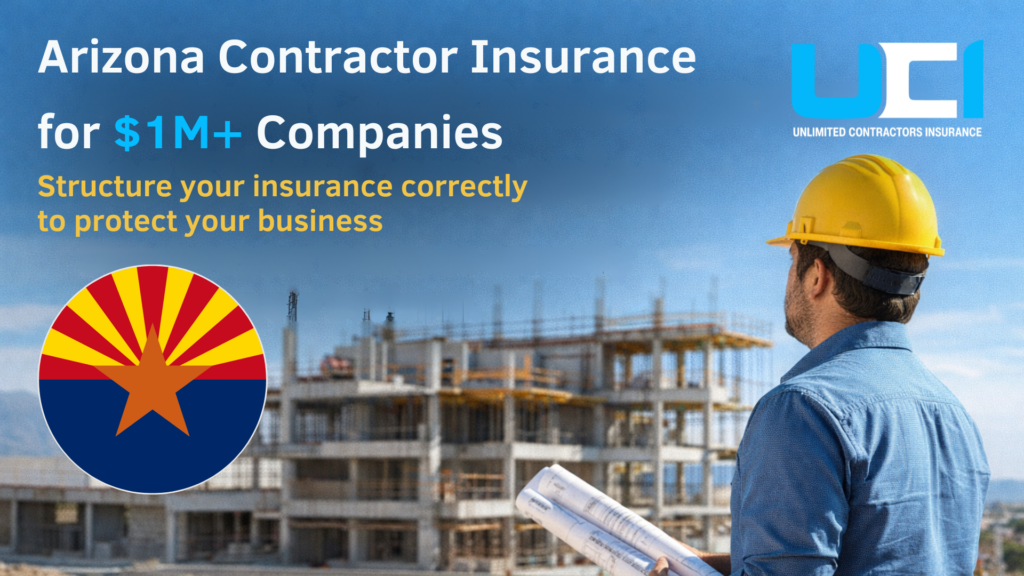
If you’re running a construction company in Arizona generating over $1 million in revenue, insurance stops being a checkbox — and becomes part of how you operate, win work, and stay in business long-term. At this level, you’re no longer just managing projects. You’re navigating contracts with stricter requirements, larger financial exposure, and clients who expect precision across every detail — including how your coverage is structured.
This isn’t about simply having insurance. It’s about having coverage that is intentionally built to support how your business actually operates.
If you’re unsure whether your current setup is structured correctly, it’s worth taking a closer look before it costs you.
What Changes at the $1M+ Level
Most contractors go years thinking coverage is just about having an active policy. That works — until it doesn’t.
Once you cross the $1M threshold, the environment changes quickly. Contracts begin requiring specific endorsements, limits, and additional insured structures. Jobs become more complex, often involving multiple parties and layered liability exposure. You’re also more likely to face audits, compliance checks, and tighter renewal scrutiny.
Where Things Start Breaking
At this level, small gaps turn into real problems. The most common issues contractors run into include:
- Coverage that doesn’t align with contract requirements
- Missing endorsements that only surface during a claim
- Audit surprises tied to payroll or subcontractors
- Policies that were built for smaller operations, not scaled businesses
This is where generalist insurance setups begin to fail — and where intentional risk design becomes critical.
Core Coverage That Needs to Be Structured Properly
At a higher revenue level, it’s not about adding more policies. It’s about making sure everything works together correctly.
General Liability (GL)
General liability is your foundation, but at this level, structure matters more than presence. It needs to align with completed operations, subcontractor exposure, and contract-specific requirements. A policy that is technically active but missing key endorsements is one of the most common failure points.
Workers’ Compensation
Workers’ comp goes beyond compliance. It directly impacts your audit outcomes, your cost structure, and how carriers view your business. Misclassification or poor payroll tracking often leads to unexpected audit costs that can be avoided with proper setup.
Commercial Auto
If vehicles are part of your operation, your policy must reflect actual usage — including drivers, jobsite exposure, and liability tied to employees. A basic policy often leaves gaps when operations scale.
Builder’s Risk
For active projects, builder’s risk protects the work itself. This includes materials, structures under construction, and exposure to theft, vandalism, or weather. Without it, you’re exposed before the project is even complete.
Professional Liability (Errors & Omissions)
As your projects become more complex — especially in design-build or advisory roles — your exposure increases. Professional liability protects against financial losses tied to errors, omissions, or miscommunication.
Cyber Liability
More contractors are operating digitally, storing client data, and using cloud-based tools. Cyber coverage protects against:
- Data breaches
- Ransomware attacks
- Operational disruption
This is quickly becoming a necessary layer, not an optional one.
Why the Cheapest Policy Gets Expensive Later
At this level, price-driven decisions tend to create long-term problems.
What looks like savings upfront often turns into higher costs through gaps, delays, or audit issues.
Common Failure Points
- Audit surprises: Uninsured subs or misclassified payroll
- Coverage gaps: Missing completed operations or endorsement issues
- Non-renewals: Poorly structured risk leading to carrier exits
- Contract misalignment: Policies that don’t meet job requirements
These issues don’t show up immediately — they surface when it matters most.
If you want to avoid this, it starts with structuring your coverage correctly from the beginning.
How to Choose the Right Insurance Structure
Choosing insurance at this level isn’t about picking a provider — it’s about aligning your coverage with your business.
Your insurance should:
- Reflect your actual operations and project types
- Align with contracts before they’re signed
- Anticipate audits instead of reacting to them
- Scale with your revenue and growth
What to Look For
The right setup isn’t generic. It’s tailored. And it evolves as your business grows.
What Impacts Your Premium
Your premium is a reflection of how your business is perceived from a risk standpoint.
Key Drivers
- Revenue and project size
- Claims history
- Subcontractor usage
- Type of work (residential vs commercial, specialty trades)
- Safety practices and documentation
Contractors who operate cleanly and structure their risk properly tend to see better pricing over time.
Common Exclusions That Catch Contractors Off Guard
Even strong policies have limitations — and this is where many contractors get caught off guard.
Typical Gaps
- Professional errors not covered under general liability
- Work performed outside stated classifications
- Contractual liabilities beyond standard scope
- Wear and tear or gradual damage
The issue isn’t that these exist — it’s not knowing about them until it’s too late.
What Happens When You File a Claim
A claim doesn’t just test your policy — it tests how well your coverage was structured.
What Actually Matters
- Clear documentation (photos, contracts, communication)
- Fast reporting to your carrier
- Alignment between the claim and how your policy is written
This is where gaps become visible — and where properly structured coverage makes all the difference.
How to Reduce Premium Without Cutting Protection
Lowering your premium isn’t about removing coverage — it’s about tightening operations.
Smart Adjustments
- Maintain strong safety practices
- Accurately classify employees and subcontractors
- Bundle policies where appropriate
- Review coverage regularly as your business evolves
Well-run operations almost always translate into better insurance outcomes.
The Bottom Line
At the $1M+ level, you’re operating in a different category. Contracts are stricter, exposure is higher, and mistakes carry real financial consequences. Insurance becomes part of how you win work, execute projects, and scale — not something that sits in the background.
If your coverage hasn’t been reviewed with this level of detail, there’s a high chance it’s not fully aligned with your business.